
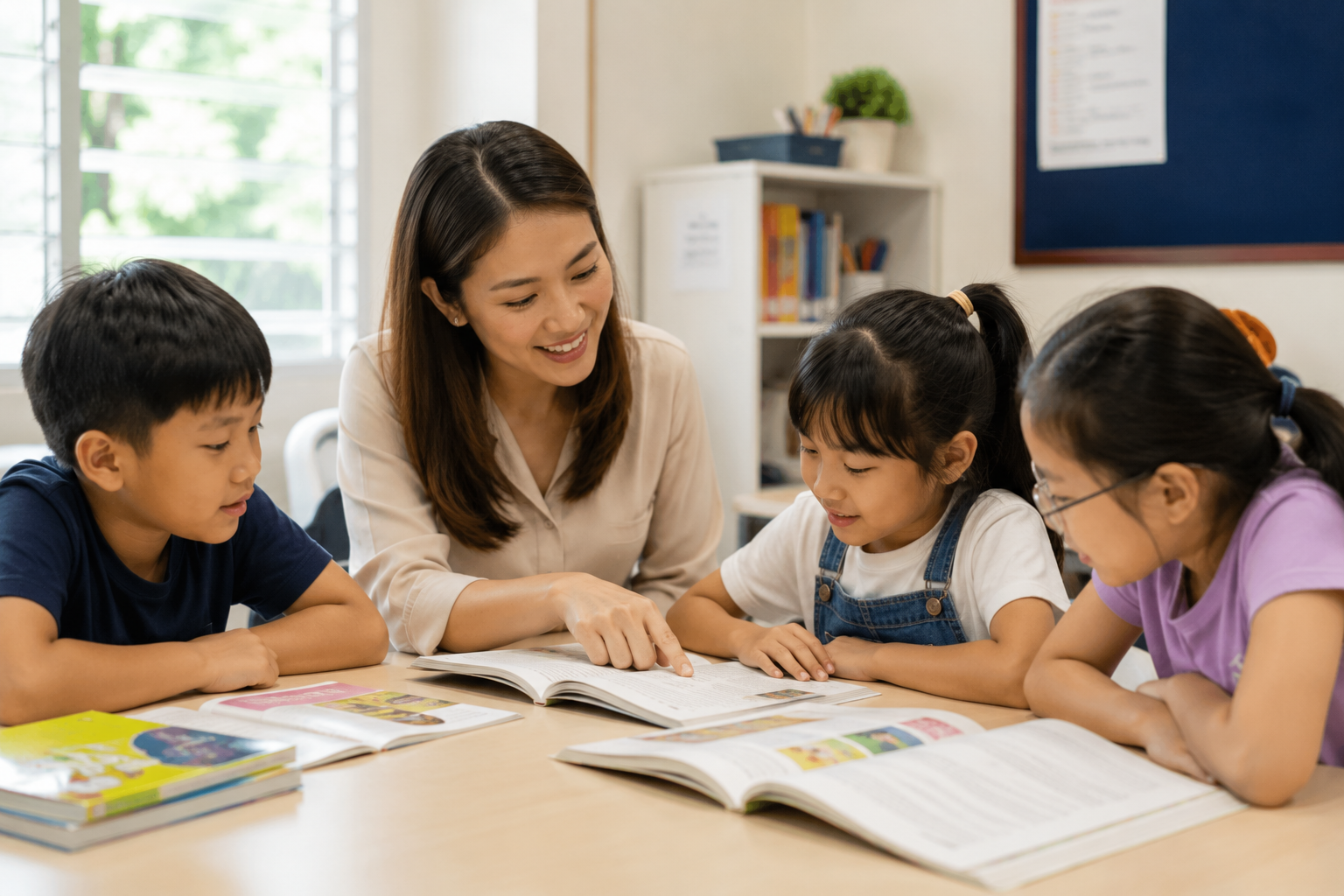
Cultivating Nurturing Reading Habits for Primary School Children in Singapore
In the competitive educational landscape of Singapore, every parent wants to give their child the best possible start. From the moment children enter Primary 1 to the crucial upper primary years in Primary 5, the ability to read fluently and comprehend complex texts forms the bedrock of academic confidence. When looking for effective Primary Tuition Singapore parents often focus heavily on drill-and-practice worksheets. However, experienced educators know that building strong, voluntary reading habits is the most sustainable way to accelerate learning across all subjects, including English, Mathematics, and Science.
What You’ll Learn
- Why independent reading habits directly impact PSLE performance across English, Maths, and Science.
- Practical strategies to encourage reluctant readers in Primary 1 through Primary 5.
- How targeted guidance from primary tuition in Singapore can bridge the gap between reading for leisure and reading for academic comprehension.
- Common pitfalls to avoid when trying to instil a love for books at home.
- Expert insights from Wisdom Kids tutors in Hougang on creating an engaging learning environment.
Why Reading Habits Matter in the Singapore MOE Curriculum
Reading is far more than an enjoyable pastime; it is a fundamental cognitive skill that powers the entire Ministry of Education (MOE) primary syllabus. Many parents are surprised to learn that a child’s reading capability directly influences their performance in subjects beyond English language papers.
1. English Language Mastery
To excel in Primary School English, students must master vocabulary, grammar, synthesis and transformation, and open-ended comprehension. Children who read regularly absorb sophisticated sentence structures and rich vocabulary naturally. Instead of memorising vocabulary lists in a vacuum, active readers understand context, nuance, and tone, making composition writing and comprehension cloze significantly easier.
2. Mathematical Word Problems and Heuristics
As students progress from Primary 1 to Primary 5, Mathematics questions become increasingly textual. Heuristic problem-solving relies heavily on the student’s ability to parse complex multi-step word problems accurately. A child who struggles with reading comprehension may understand mathematical concepts perfectly well, yet misinterpret what the question is asking, leading to avoidable errors.
3. Science Stimulus-Based Questions
Primary Science assessments in Singapore require students to analyze diagrams, tables, and experimental scenarios. Open-ended questions test a child’s ability to apply scientific concepts and articulate their reasoning clearly using precise keywords. Well-read students generally possess stronger critical thinking skills and express their scientific answers with clarity and logic.
How Primary Tuition Singapore Helps Cultivate Lifelong Reading Habits
While parents strive to create a literate home environment, busy family schedules can make consistent reading routines challenging to maintain. This is where dedicated educational support plays a transformative role. Enrolling your child in structured Primary Tuition Singapore programs provides the discipline, encouragement, and guidance necessary to turn reading into an enjoyable, lifelong habit.
Choosing the Right Primary Tuition Singapore Provider to Support Literacy
Not all tuition centres approach learning in the same way. The right primary tuition centre in Singapore does not rely solely on rote learning; instead, it incorporates guided reading, interactive discussions, and explicit comprehension strategies into every lesson. When choosing tuition for your child, look for programmes that emphasize:
- Interactive Comprehension Strategies: Teaching children how to annotate texts, identify context clues, and summarize main ideas.
- Small Group Dynamics: Allowing every student to read aloud, ask questions, and discuss themes in a supportive setting.
- Tailored Material: Exposing students to varied text types, including fiction, non-fiction, news articles, and scientific passages.
Practical Tips for Parents: How to Build Daily Reading Routines
Building a solid reading habit requires consistency, patience, and the right approach. Here are actionable tips you can implement at home today to foster a genuine love for reading in your primary school child.
1. Establish the 15-Minute Daily Reading Anchor
Consistency trumps duration. Expecting a Primary 2 student to sit down with a book for an hour can lead to frustration. Instead, establish a non-negotiable 15-minute daily reading window. Set this anchor after dinner or right before bedtime. Over time, this small daily investment creates a powerful compounding effect on your child’s vocabulary and cognitive stamina.
2. Diversify Reading Materials
Do not restrict your child strictly to classical literature or assessment book passages. Broaden their exposure by introducing a variety of formats:
- Graphic Novels: Excellent for reluctant readers in Primary 1 and Primary 2 to build visual literacy and contextual understanding.
- Children’s Newspapers and Magazines: Ideal for Primary 3 to Primary 5 students to build current affairs knowledge, which is vital for situational writing.
- Science and Nature Periodicals: Helps build specialized vocabulary while sparking curiosity about the physical world.
3. Practise Active Reading Techniques
Encourage your child to interact with what they read rather than passively skimming through pages. Ask open-ended questions during or after reading sessions:
- “Why do you think the character made that decision?”
- “What do you think will happen in the next chapter?”
- “Can you find a new word on this page and guess what it means from the sentence?”
This simple exercise transforms passive reading into active critical analysis, directly preparing them for upper primary comprehension papers.
Common Mistakes Parents Make When Fostering Reading Habits
Even with the best intentions, parents can accidentally derail a child’s enthusiasm for reading. Be mindful to avoid these common mistakes:
- Forcing Material That Is Too Advanced: Pushing a child to read books far above their current decoding ability creates anxiety and destroys confidence. Select books where your child understands around 90% of the words independently.
- Treating Reading as a Punitive Chore: Assigning reading as a punishment or linking it strictly to assessment drills turns reading into a stressful task rather than a rewarding experience.
- Stopping Bedtime Reading Too Early: Many parents stop reading aloud to their children once they learn to decode words independently in Primary 1 or 2. Continuing shared reading through Primary 3 and 4 helps model fluency, intonation, and higher-level comprehension.
Expert Advice from Wisdom Kids Tutors in Hougang
At Wisdom Kids in Hougang, our experienced tutors witness firsthand how reading habits transform academic outcomes. We view literacy as the master key to unlocking a child’s academic potential. In our small-group English, Mathematics, and Science classes, we intentionally integrate guided reading and analytical discussions.
We help Primary 1 to Primary 5 students unpack complex texts step-by-step, building both comprehension skills and exam confidence. By creating a warm, encouraging environment where mistakes are treated as learning opportunities, we guide children to become self-directed, curious learners who enjoy reading for discovery and growth.
Conclusion
Building strong reading habits during the primary school years is one of the greatest educational gifts you can offer your child. It lays a firm foundation for mastery in English, enhances problem-solving clarity in Mathematics, and sharpens analytical thinking in Science. When paired with high-quality, personalised support from a trusted provider of Primary Tuition Singapore, your child gains the tools, strategy, and confidence needed to excel academically and develop a lifelong love for learning.
Frequently Asked Questions
How early should I start building structured reading habits for my primary school child?
It is best to start as early as Primary 1. Early exposure to structured daily reading helps children comfortably transition from simple word decoding to deeper comprehension, easing their transition into higher primary levels.
My Primary 3 child dislikes reading books. How can I help them?
Start small with high-interest materials like graphic novels, illustrated non-fiction, or short science magazines. Establishing a brief 10 to 15-minute daily reading habit without pressure helps build confidence without overwhelming them.
Can reading habits really improve my child’s performance in Primary Mathematics and Science?
Yes, absolutely. Primary School Mathematics and Science rely heavily on word problems and stimulus-based texts. Strong reading comprehension helps students accurately parse multi-step instructions and articulate precise scientific answers.
How does tuition support a child who struggles with English comprehension?
A specialized primary tuition programme breaks down comprehension passages systematically. Tutors teach proven techniques such as text annotation, contextual clue decoding, and structural analysis in a supportive environment.
What subjects does Wisdom Kids offer at its Hougang centre?
Wisdom Kids in Hougang offers specialized tuition in English, Mathematics, and Science for Primary 1 to Primary 5 students, focusing on personalised learning and confidence building.
Nurture Your Child’s Academic Success at Wisdom Kids Hougang
Give your child the academic edge and reading confidence they deserve. At Wisdom Kids in Hougang, we provide small-group, personalised learning tailored for Primary 1 to Primary 5 students across English, Mathematics, and Science. Our dedicated educators focus on active learning strategies and genuine confidence building to help every child reach their full potential.
Ready to transform your child’s learning journey? Contact us today to book a trial lesson and experience the Wisdom Kids difference!