
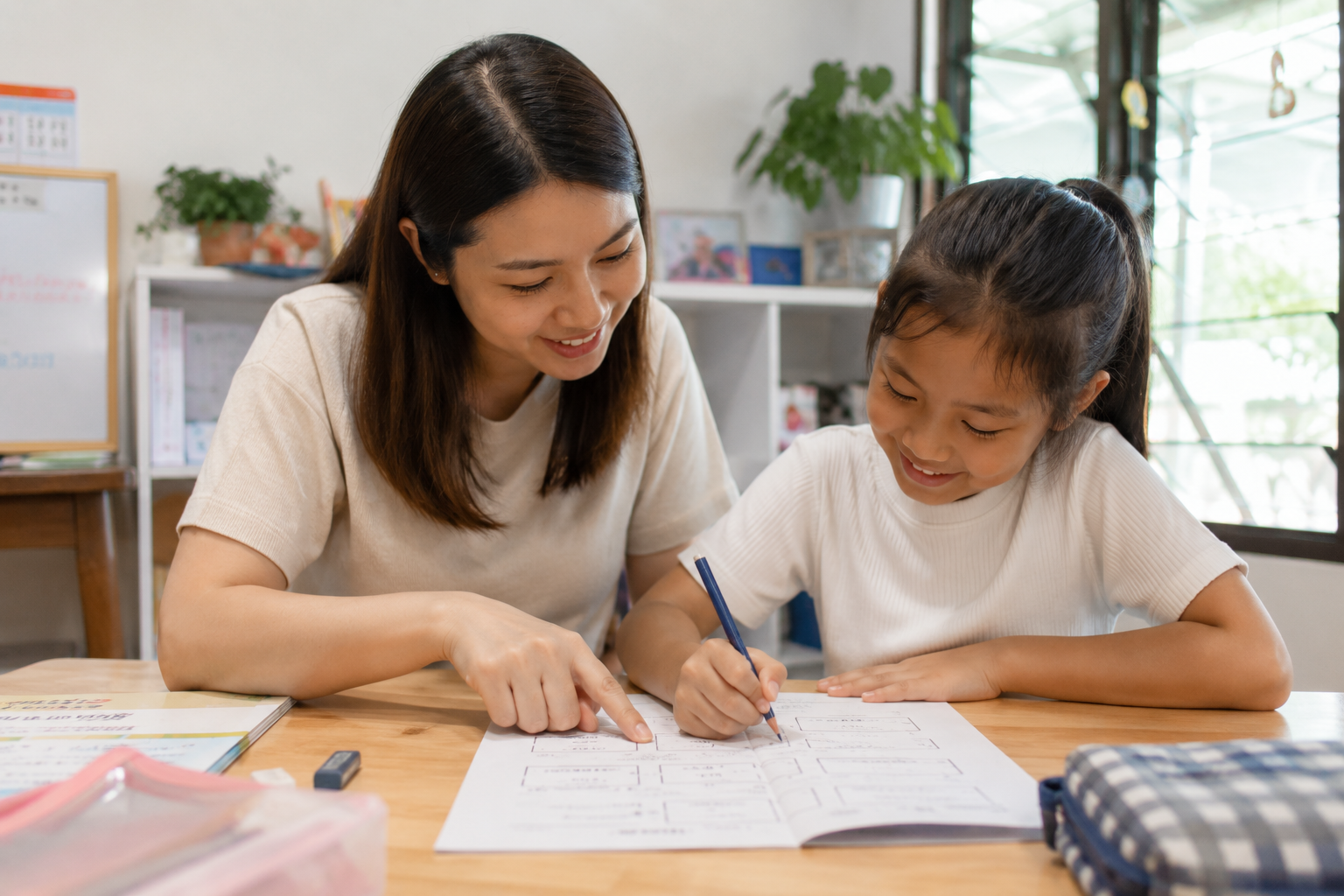
Transitioning from Primary 2 to Primary 3 is often a significant leap for young learners in Singapore. Suddenly, mathematical questions shift from simple computation to multi-step word problems requiring spatial visualisation, logic, and systematic working. Many parents seeking effective Primary 3 Maths Tuition Singapore observe that their children struggle not with basic addition or multiplication, but with translating textual problems into accurate visual models. Mastering problem-solving techniques at this stage is essential for building a sturdy foundation before upper primary challenges arrive.
What You’ll Learn
- Why Primary 3 represents a major milestone in the Ministry of Education (MOE) Mathematics syllabus
- The core mathematical heuristics required for Primary 3 word problems
- Step-by-step strategies to help your child dissect complex questions confidently
- Common pitfalls students encounter during examinations and how to avoid them
- How targeted guidance fosters long-term problem-solving resilience
Why Primary 3 Maths Problem Solving Matters
In Primary 1 and Primary 2, mathematics focuses heavily on foundational arithmetic, basic measurement, and straightforward word problems. However, the Primary 3 curriculum introduces higher-order thinking skills. Questions become broader in scope, introducing concepts such as equivalent fractions, area and perimeter, and multi-step bar models.
Problem solving at the Primary 3 level is designed to evaluate a child’s deep understanding of mathematical concepts rather than memorised rules. When children fail to grasp these heuristics early, their confidence can dip significantly as the difficulty escalates in Primary 4 and beyond. Establishing strong problem-solving habits during Primary 3 ensures that your child views mathematics as an engaging puzzle rather than an overwhelming hurdle.
How Primary 3 Maths Tuition Singapore Helps Master Complex Word Problems
Navigating the transition to heuristic-based problem solving requires structured instruction tailored to a young learner’s developmental stage. Dedicated Primary 3 Maths Tuition Singapore programmes focus on breaking down abstract problem sums into clear, visual representations that young minds can easily digest.
Through systematic instruction, pupils learn to categorise word problems into specific model types. Whether a question involves comparing quantities, tracking changes before and after an event, or identifying equal parts, structured guidance empowers students to approach each task with a reliable plan of action.
Core Heuristics Taught in Primary 3 Maths Tuition Singapore
Primary 3 introduces several key heuristic methods that form the backbone of Singapore Mathematics. Understanding when and how to apply these methods is crucial for solving word problems efficiently:
- The Model Method (Part-Whole & Comparison): Visualising quantities using rectangular bars helps pupils see relationships between numbers clearly. Part-whole models display how smaller components form a total, while comparison models highlight differences between two or more items.
- Working Backwards: Essential for questions that reveal the final quantity after a series of additions, subtractions, or transfers, requiring the student to reverse the sequence of events to find the original amount.
- Systematic Listing / Supposition: Used when students need to find specific combinations of values (such as counting heads and legs in farm animal problems) by systematically testing possibilities or making logical assumptions.
- Look for Patterns: Encourages children to identify numerical or visual sequences, helping them determine future terms without laboriously drawing every single step.
Practical Tips to Improve Your Child’s Problem Solving at Home
Parents can actively support their child’s mathematical growth by reinforcing structured problem-solving habits during daily revision. Here are practical steps to cultivate strong mathematical habits:
1. Encourage Active Reading and Annotation
Children frequently make mistakes because they rush through the text. Encourage your child to read the problem sum twice. On the second reading, they should annotate key details by underlining important values, circling key action words (such as “left”, “gave away”, or “more than”), and highlighting what the question is explicitly asking them to find.
2. Prioritise Neat Model Diagrams
A poorly drawn model diagram often leads to calculation errors. Teach your child to draw neat, proportional rectangular bars with clear labels and question marks indicating the unknown value. Clean diagrams turn abstract stories into obvious mathematical equations.
3. Emphasise Process Over Speed
Accuracy stems from methodical thinking rather than speed. Praise your child when they lay out clear working steps and model diagrams, even if their final calculation has a minor arithmetic slip. Rewarding correct logic builds confidence and reinforces systematic thinking.
4. Implement a Structured Verification Step
Once your child derives an answer, guide them to plug the final number back into the original story problem. Checking whether the result makes logical sense instils self-reliance and catches careless mistakes before homework is submitted or exam papers are handed in.
Common Mistakes Students Make in Primary 3 Word Problems
Understanding where pupils routinely lose marks enables parents and tutors to intervene early. Below are the most frequent pitfalls seen in Primary 3 examination scripts:
- Misinterpreting Comparative Keywords: Students often see the word “more” and automatically add, or see “less” and subtract, without analysing who possesses the larger quantity in context.
- Omitting Units of Measurement: Failing to write units such as grams, metres, centimetres, or dollars in statements and final answers can lead to unnecessary mark deductions.
- Incomplete Model Statements: Drawing bars without labelling the categories or leaving off bracketed totals makes it easy for students to misplace values during multi-step calculations.
- Calculation Slips in Intermediate Steps: Correctly setting up a problem but committing simple mental arithmetic errors during multi-digit multiplication or subtraction.
Expert Advice from Wisdom Kids
At Wisdom Kids, our experienced educators believe that every child can excel in mathematics when guided with patience, clarity, and structural consistency. The leap into Primary 3 problem solving should never feel daunting.
We focus on building a safe, encouraging environment where students feel comfortable attempting challenging heuristic questions. By breaking down complex multi-step problems into manageable, sequential steps, we help children transition from confusion to clarity. Our small-group structure ensures that every student receives personalized feedback on their model drawing and working steps, equipping them with the resilience needed to master upper primary mathematics.
Conclusion
Improving Primary 3 Maths problem-solving skills is a gradual process that involves mastering visual heuristic models, building systematic habits, and cultivating self-assurance. By fostering neat diagrammatic representations and encouraging careful reading, parents can help their children overcome word problem anxiety. Partnering with a dedicated provider of Primary 3 Maths Tuition Singapore ensures your child receives the professional mentorship needed to turn mathematical challenges into lifelong problem-solving triumphs.
Frequently Asked Questions
Why is my child struggling with Primary 3 Maths when they scored well in Primary 2?
Primary 3 introduces a structural shift from simple, direct computation to multi-step word problems requiring heuristic methods like model drawing. Children need time and guided practice to adapt to this higher visual and analytical demand.
How often should my child practice model drawing at home?
Short, consistent practice sessions of 15 to 20 minutes three times a week are far more effective than long weekend cramming sessions. Consistent exposure reinforces visual thinking habits naturally.
What if my child prefers mental calculation over drawing model diagrams?
While strong mental arithmetic is beneficial, complex upper primary word problems require structured visual tracking. Encourage your child to draw models for multi-step questions to prevent working memory overload and minimize careless errors.
How does tuition help if my child already knows basic addition and multiplication?
Tuition focuses on application and analytical heuristics rather than basic computation. Tutors teach pupils how to interpret word problems, choose the correct heuristic strategy, and structure step-by-step solutions neatly.
Can children with low maths confidence catch up during Primary 3?
Absolutely. Primary 3 is the ideal time to remediate foundational gaps. With structured guidance, bite-sized learning targets, and positive reinforcement, students can quickly regain their confidence and master problem-solving skills.
Build Unshakeable Maths Confidence at Wisdom Kids
Is your child finding Primary 3 word problems challenging? At Wisdom Kids in Hougang, our dedicated tutors specialize in personalised learning for Primary 1 to Primary 5 students. We transform complex heuristic problem solving into clear, manageable steps that foster real academic progress and lasting confidence building.