
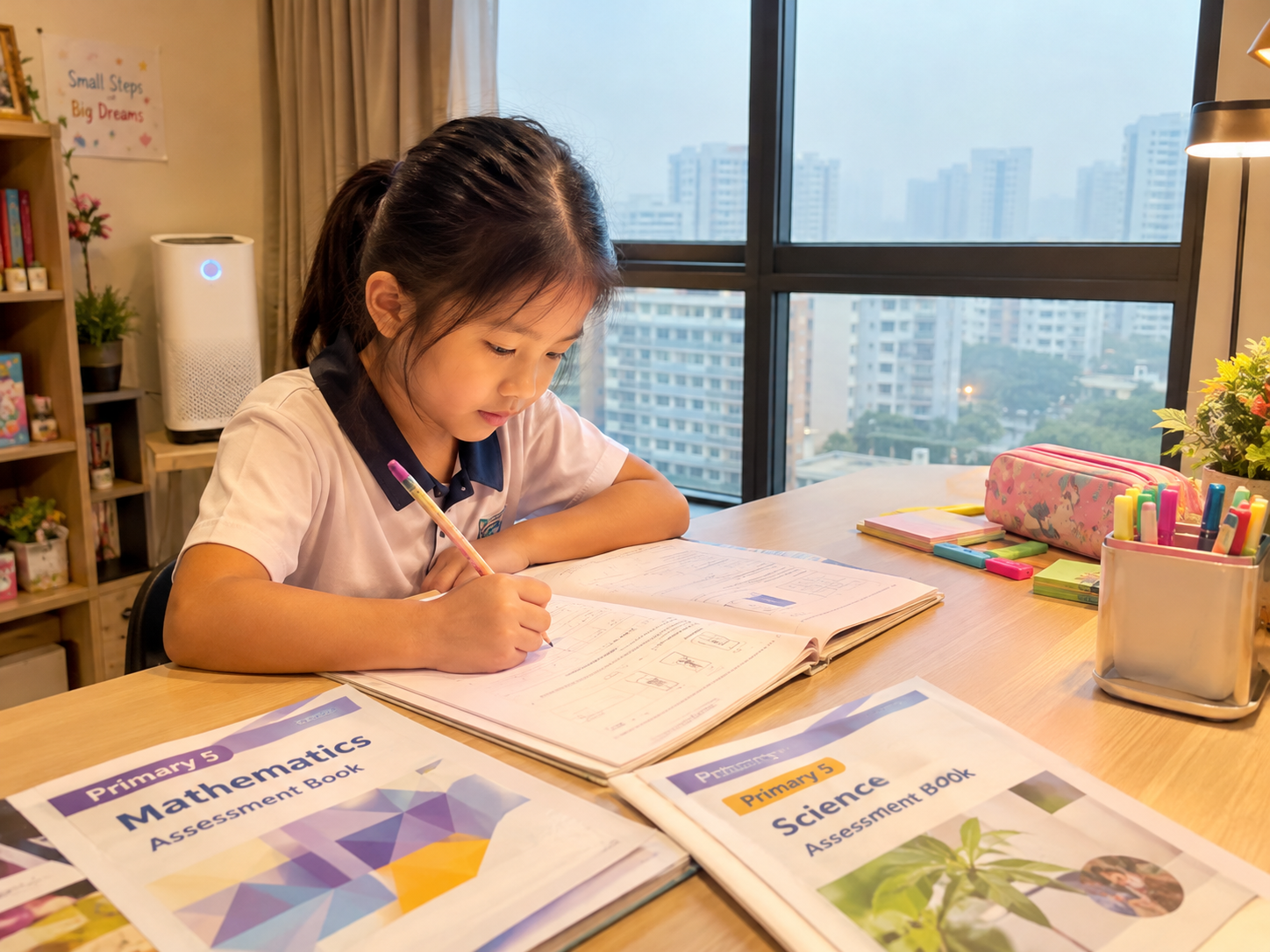
When periodic transboundary haze hits Singapore, outdoor activities pause, physical education classes move indoors, and parents often find themselves managing learning from the dining table. During high Pollutant Standards Index (PSI) readings, ensuring that during haze Singapore children study at home effectively becomes a top priority for families across the island. Keeping Primary 1 to Primary 5 pupils focused, active, and academically engaged without the structure of a regular school day presents a unique challenge for busy parents.
What You’ll Learn
- Why maintaining study routines during haze days is crucial for P1–P5 pupils
- Haze Singapore: How children study at home effectively with subject strategies
- Practical tips to set up a clean, productive learning environment
- Common home-learning pitfalls to avoid during prolonged haze periods
- Expert advice from primary educators on maintaining momentum
- Summary and next steps for academic success
Why Maintaining Study Routines Matters During Haze Disruptions
Disruptions to daily school routines can quickly throw young learners off balance. When air quality deteriorates in Singapore, children miss out on recess play, outdoor sports, and physical movement. This cooped-up energy often leads to restlessness, reduced attention spans, and difficulty concentrating on homework.
For Primary 1 and Primary 2 students, momentum is essential for building foundational literacy and numeracy. For Primary 3 to Primary 5 students, continuous revision is vital for mastering complex subject topics and preparing for school assessments. Allowing several days to drift into unstructured screen time can lead to learning loss that takes weeks to recover. Establishing a structured, healthy study routine at home keeps your child’s mind sharp while keeping their lungs safe from airborne pollutants.
Haze Singapore: How Children Study at Home Effectively
Creating an optimal home learning framework requires combining physical well-being with smart academic planning. When haze keeps your family indoors, transition your child’s mindset from ‘staying home’ to ‘active indoor learning’.
Subject-Specific Strategies When Haze Singapore Children Study at Home
To keep study sessions engaging and productive across core primary subjects, adapt your approach based on subject demands:
1. English Language Mastery
Indoor days present an ideal opportunity to expand vocabulary and refine writing skills. Encourage your child to read aloud for 20 minutes daily to improve fluency and articulation. Introduce targeted comprehension practice and vocabulary logs based on their reading materials. If your child requires additional guidance in composition writing or grammar rules, our specialized English Tuition programme helps pupils articulate ideas clearly and tackle exam formats confidently.
2. Mathematics Problem-Solving
Maths demands active problem-solving rather than passive reading. Break mathematical concepts into digestible chunks using visual model drawing and heuristic techniques. For Primary 1 and 2 learners, use physical counters or building blocks to demonstrate addition and multiplication. For P3 to P5 students, focus on step-by-step problem sums. If your child struggles with word problems, our tailored Maths Tuition equips pupils with structured heuristics and analytical skills.
3. Science Concept Application
Primary Science relies heavily on answering techniques, keyword application, and process skills. Use time at home to conduct simple, safe indoor experiments or discuss real-world scientific phenomena, such as how air filters work to trap fine particulate matter (PM2.5). Help your child practice linking scientific concepts to specific scenario questions. To build strong open-ended answering techniques, explore our interactive Science Tuition classes.
Practical Tips to Optimise Indoor Home Learning
Transforming your home into a conducive study space during hazy conditions requires a few strategic adjustments:
- Purify the Air in the Study Area: Keep windows and doors closed when PSI levels rise above moderate levels. Run an air purifier equipped with a HEPA filter in the study room to ensure fresh, clean air circulating around your child’s workspace, preventing drowsiness and respiratory irritation.
- Implement the Micro-Session Routine: Young children struggle to concentrate for hours at a time. Divide study periods into 25-minute blocks followed by 5-minute movement breaks (stretch, hydrate, or do gentle indoor exercises).
- Create a Dedicated Work Zone: Avoid letting children complete worksheets on the bed or sofa. A dedicated desk with proper ergonomics, adequate lighting, and minimal distractions reinforces the psychological boundary between rest and study time.
- Maintain Hydration and Nutrition: Hazy weather often causes throat irritation and lethargy. Ensure your child drinks plenty of water throughout the day and consumes nutrient-dense snacks like fresh fruits to maintain energy levels.
- Utilise Digital Learning Thoughtfully: Balance physical assessment books with interactive educational software or centre portal worksheets to keep lessons varied and engaging.
Common Mistakes Parents Make During Haze Days
Even with good intentions, parents can fall into habits that reduce learning efficiency during homebound days:
1. Overloading the Daily Schedule
Assigning back-to-back assessment papers to make up for missed outdoor activities quickly causes fatigue and resistance. Quality of learning always trumps sheer quantity of worksheets completed.
2. Allowing Uncontrolled Screen Time Breaks
Using tablets or mobile games as study breaks can make it extremely difficult for children to refocus on revision afterward. Instead, choose physical stretches, listening to audiobooks, or grabbing a healthy snack during break times.
3. Ignoring Physical Comfort and Air Quality
Studying in a stuffy, poorly ventilated room without air purification can lead to headaches, fatigue, and sluggish cognitive performance. Prioritise air quality before expecting sustained focus.
Expert Advice from Wisdom Kids Educators
At Wisdom Kids, our experienced tutors emphasise consistency and positive reinforcement over rigid drill practices. When external conditions like haze disrupt normal routines, children look to parents for structure and calm. Setting clear, achievable daily targets gives young learners a sense of accomplishment.
If you find that your child struggles with self-motivation or needs targeted support to bridge learning gaps in English, Maths, or Science, professional guidance can make all the difference. Learn more About Us and discover how our small-group, personalised approach builds academic confidence in Primary 1 through Primary 5 pupils.
Conclusion: Building Resilient Learners at Home
While transboundary haze is an unavoidable environmental occurrence, learning disruptions do not have to follow. By maintaining clean indoor environments, setting clear routines, and utilizing targeted subject strategies during times of bad haze Singapore children study at home with confidence and ease. Keep lessons engaging, support physical well-being, and turn indoor days into productive learning milestones.
Frequently Asked Questions
How do I keep my child focused on studying during haze days in Singapore?
Maintain a structured schedule using short 25-minute study blocks followed by 5-minute active breaks. Ensure the study room is well-ventilated with an air purifier running to keep your child alert and comfortable.
What subjects should Primary 1 to Primary 5 students prioritise during home study?
Focus on core subjects including English comprehension and writing, Maths heuristic problem-solving, and Science process skills. Balancing these subjects across short daily sessions prevents burnout while maintaining learning momentum.
How long should home study sessions be for primary school children?
Primary 1 and 2 pupils focus best in 15 to 20-minute intervals, while Primary 3 to 5 pupils can manage 25 to 30 minutes per block. Always schedule short rest intervals between subjects to maintain peak concentration.
How does indoor air quality affect a child’s concentration?
Poor indoor air quality and high PM2.5 levels can cause lethargy, headaches, and throat discomfort, significantly lowering cognitive focus. Using HEPA air purifiers and keeping rooms dust-free helps maintain alertness during study hours.
How can Wisdom Kids support my child’s learning during unexpected disruptions?
Wisdom Kids offers structured, small-group tuition tailored to the MOE syllabus for P1–P5 students. Our customized learning plans ensure students stay ahead in English, Maths, and Science regardless of external scheduling disruptions.
At Wisdom Kids in Hougang, we deliver structured, engaging, and personalised learning tailored for Primary 1 to 5 students. Whether studying at home or in our modern classroom, we help children master English, Maths, and Science with ease.